COMING SOONThe Unlikely Triathlete: A Bold Escape
A memoir • A bold escape

The real escape wasn't from Alcatraz.

At sixty-five, with a pacemaker beneath his wetsuit, Tim Boyd headed toward one of the world's most formidable triathlons — and a much larger question about what it means to grow older.

Discover the story
65 years oldOne pacemakerTwo attemptsOne extraordinary finish
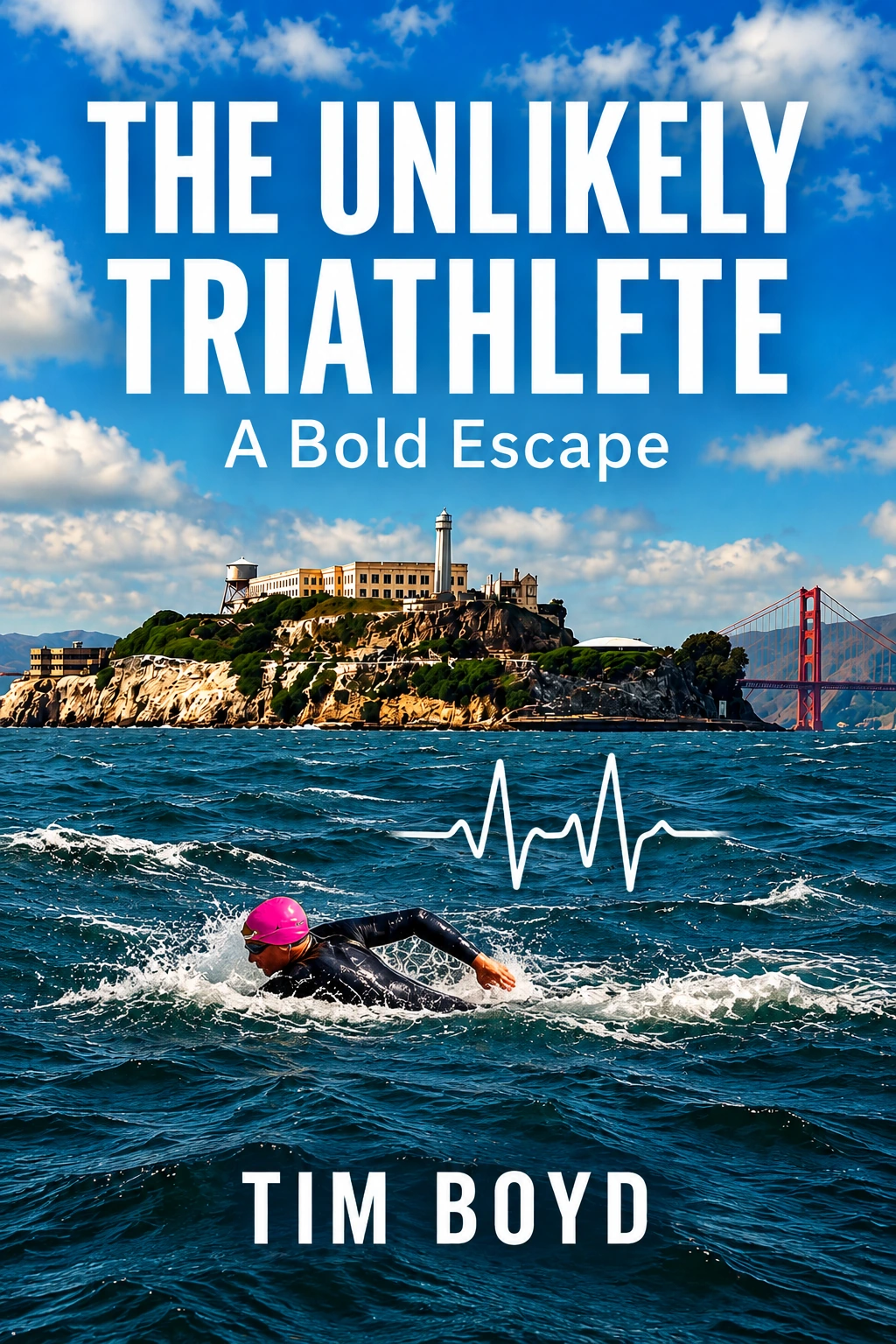
Book-cover image for The Unlikely Triathlete: A Bold Escape by Tim Boyd. The swimmer wears a pink swim cap.

THE UNLIKELY TRIATHLETE · A BOLD ESCAPE

San Francisco Bay · June 7, 2026Scroll to explore
"The race was the destination. The refusal to become smaller was the story."
01 / The story

This was never
just about a race.

A heart-rhythm disorder. A pacemaker. A frightening blood clot. Injuries, career uncertainty, and a creeping suspicion that the world had started talking about his best years in the past tense.

Tim Boyd had once been a college quarterback and marathon runner. Now, in his sixties, he was facing an unfamiliar opponent: the idea that his world should become smaller simply because he was getting older.

When he chose the Escape from Alcatraz Triathlon, the goal was gloriously unreasonable. The first attempt ended before the start line. A year later, he returned with a very different understanding of what determination actually required.

"I didn't set out to become an inspiration."

This is the true story of that return — told with candor, a little hard-earned humility, and plenty of moments when the author himself was the problem.

I.

The verdict

Age, illness, and other people's expectations begin to define what Tim is supposedly capable of doing next.

II.

The unfinished attempt

A low-speed cycling accident and two cracked ribs end his first Alcatraz bid before he can board the ferry.

III.

The return

Smarter preparation, family support, and an entirely new respect for limits bring him back to San Francisco Bay.

Cover for The Unlikely Triathlete, showing Alcatraz Island, choppy blue water and a swimmer.
02 / The book

THE UNLIKELY TRIATHLETE

A Bold Escape

A candid, funny, unvarnished memoir about aging without surrendering, adapting without shrinking, and choosing something difficult enough to make life feel large again.

More than a sports story, it's about family, identity, uncertainty, the limits of the body you have now — and the stubborn decision to keep doing things that matter.

Coming soon. Want to know when the book is available? Join the launch list.

The question at the heart of the book
With the body and heart you have now — not the ones you used to have — what's your version of Alcatraz?
The Unlikely Triathlete · A Bold Escape
03 / A few turning points

The long way
to the ferry.

Four dates tell only part of the story. The book fills in the decisions, people, false starts, and occasionally terrible judgment between them.

A number on a watch

A resting heart rate over 140 leads to an emergency-room visit and a diagnosis of atrial flutter.

New hardware

A pacemaker is implanted. Getting back to exercise becomes possible — but the medical learning curve is real.

A ferry leaves without him

A nearly stationary bike fall cracks two ribs. The first attempt is over before race morning.

The escape

Tim returns, swims San Francisco Bay, rides the Presidio hills, and finishes the Escape from Alcatraz Triathlon.

04 / A look behind the story

A Bold Escape
in motion.

A few real moments from the race that inspired the memoir: Alcatraz, the bike, the Sand Ladder, and the unforgettable finish.

A first look at The Unlikely Triathlete.
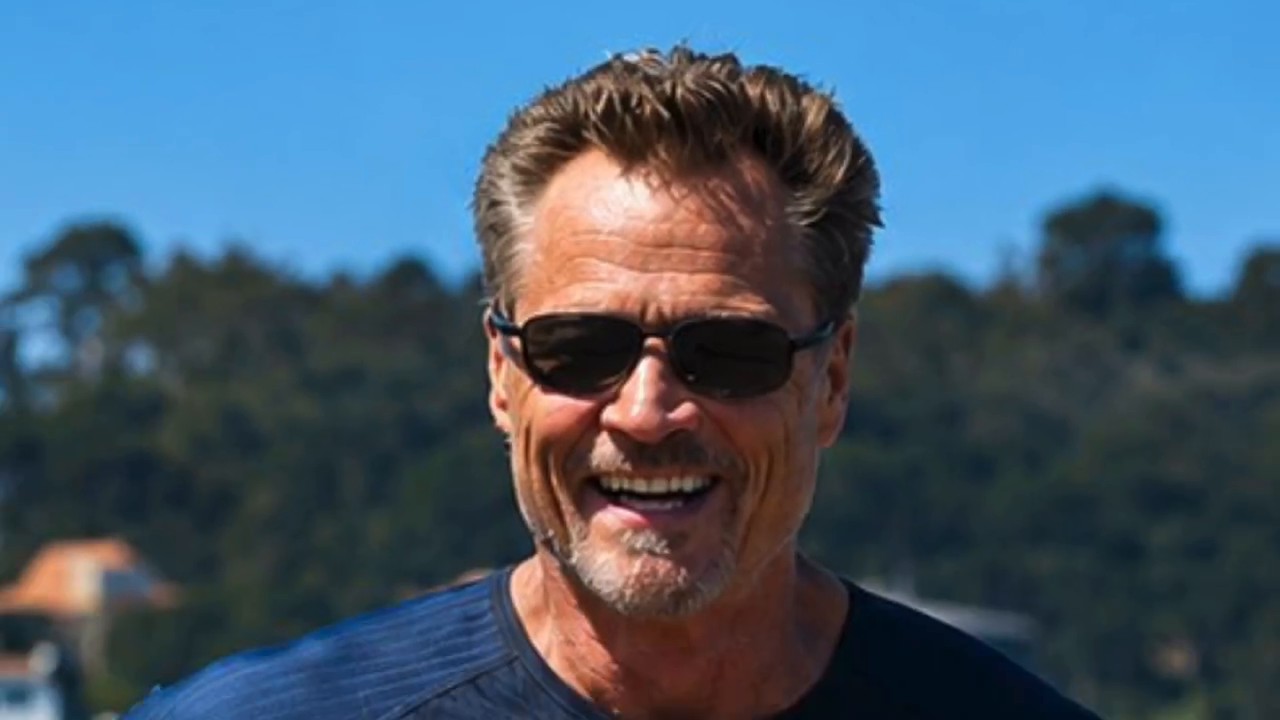
Tim Boyd smiling during the 2026 Escape from Alcatraz Triathlon
Escape from Alcatraz · June 7, 2026
05 / Meet the author

Tim Boyd

Former quarterback. Marathon runner. Technology executive. Unlikely triathlete.

Tim grew up in Canada, where a lifelong appetite for competition took him from college football to championship basketball in England and eventually to distance running.

He spent his professional life in technology sales and business development. After a heart-rhythm disorder, a pacemaker, and a failed first attempt, Tim completed the Escape from Alcatraz Triathlon at age sixty-five in June 2026.

He lives in San Diego with his wife, Anna, and continues to swim, cycle, and run. The Unlikely Triathlete: A Bold Escape is his memoir about family, aging, identity, and a refusal to accept that the meaningful years are behind him.
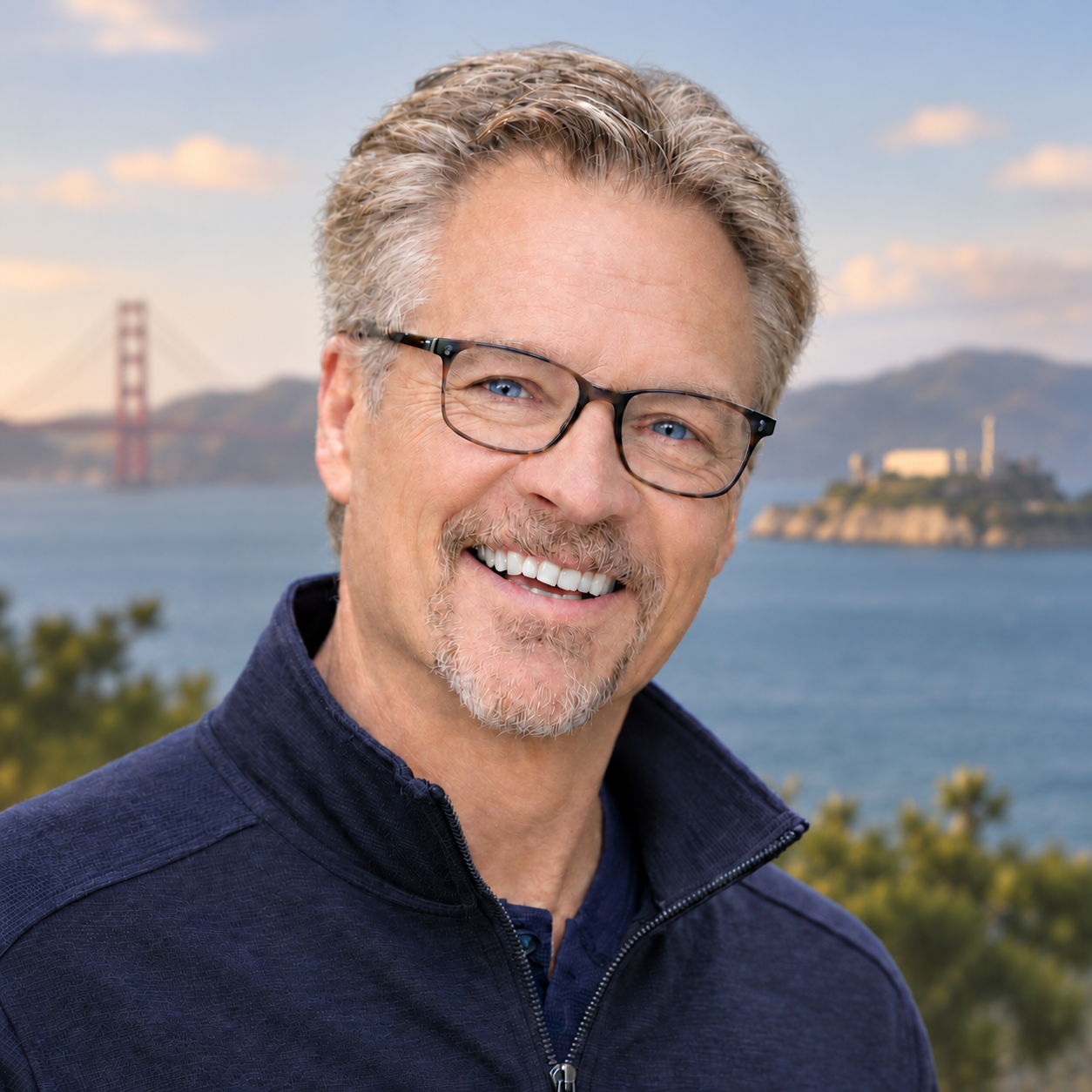
Illustrated portrait of Tim Boyd with San Francisco Bay in the background
Tim Boyd · Author portrait

A Bold Escape — a glimpse of the journey.

From the opening: The Ferry

The boat is eerily quiet.

When I first step onto the ferry at about four-thirty in the morning, it is still twilight and the boat is almost empty. I am one of the first athletes aboard, and I remember looking around, trying to decide where I should sit while I wait. There isn’t much to see yet.

By the time we get underway, the early light has come up and the ferry is packed with nearly two thousand athletes, most of us sealed in black neoprene. I can clearly see that we are moving away from the city. Around me, people are making adjustments and preparing for what is coming, all of us pretending this is normal.

It doesn’t feel normal.

There’s no pumping music or pep talk. Just the hum of the engines and fragments of conversation that fade almost as soon as they begin.

People ask where someone is from, whether this is their first Alcatraz, and how they trained. I talk with several athletes, especially those around my age, comparing our preparation in brief, subdued conversations.

Some people sit with their heads down. Others look through the windows or move out onto the deck. A few keep adjusting goggles, caps, and timing chips—anything that gives their hands something to do.

We all know what is coming.

Soon the ferry will stop near Alcatraz. The doors will open, and we will begin jumping into San Francisco Bay.

The water is fifty-five degrees.

The swim is roughly a mile and a half, although the current gets a vote. Aim too far in one direction, and you swim farther than necessary. Aim too far in the other, and the outgoing current may carry you past the exit. There is no line painted on the bottom and no friendly row of lane markers leading to shore.

Just cold water, chop, current, several thousand swinging arms, and a handful of buildings onshore that we have been told to use as landmarks.

I’m sixty-five years old.

Under the wetsuit, just below my left collarbone, is a pacemaker.

I didn’t set out to become an inspiration. I wasn’t standing on a mountaintop thinking, You know what the world really needs? My story.

If you had met me a few years earlier, you probably would not have predicted this morning. You might have seen the grey hair and the extra weight. You might have noticed that I became winded more easily than a former athlete should. You might have heard me talk about the sports I once played or the marathons I once ran and quietly placed me in the category reserved for people whose best physical years are behind them.

I might have placed myself there too.

That was the danger.

My entire life, I had known myself through movement and competition. I was the kid who grew up in locker rooms, the quarterback who wanted the ball in his hands, the runner who once believed a Boston qualifying time might be within reach.

Then life did what life does. Work became demanding. My children’s schedules replaced my own. Fitness faded slowly enough that I could explain it away.

I was getting older. Of course running felt harder. Of course I was slower. Of course I was more tired.

That explanation worked until it didn’t.

Somewhere between the athlete I remembered, and the older man people had begun to see, a gap opened. From the outside, it might have looked as though I had already lived the important chapters: athlete, husband, father, businessman. A good run. Nothing to complain about.

From the inside, it didn’t feel finished.

I still wanted to compete. I still wanted to build things. I still wanted to find out what I could do when the outcome wasn’t guaranteed.

But wanting those things and having the body to support them were no longer the same thing.

The pacemaker beneath the wetsuit is proof of that.

I don’t think about it constantly anymore. Most days, it is simply there, quietly doing its job. But on this ferry, heading toward cold, open water, I’m very aware of it.

I’m aware of the scar and the wiring threaded into my heart. I’m also aware that my body has limits the younger version of me never had to consider—and that I chose to be here anyway.

Not because age doesn’t matter. It does.

Not because the pacemaker somehow made me indestructible. It didn’t.

And not because I was trying to prove that sixty-five is the new thirty. That always sounds ridiculous to me. Sixty-five is sixty-five. Recovery takes longer. Injuries carry consequences. Your body sends warnings and ignoring them is no longer toughness. It’s stupidity.

But respecting reality is not the same thing as surrendering to it.

That distinction is part of what brought me onto this boat.

The ferry continues across the bay. The cabin grows quieter still as people pull their goggles into position and adjust their caps one last time. The nervous energy around me narrows into something more focused.

We are getting close.

Somewhere outside is a prison island famous because people were not supposed to escape from it.

I am moving toward it voluntarily.

That irony isn’t lost on me.

The race is called Escape from Alcatraz, but getting onto this ferry had already required me to change the direction my life was taking.

A few years earlier, I had wanted to feel like an athlete again. I hadn’t imagined the doctors, the hardware, the mistakes—or that my first attempt would end before I ever reached the starting line.

The athlete I had been and the older man I was becoming no longer seemed to fit together. I had reached a point where something had to change.

The ferry slows, people begin standing, and the doors will open soon.

To understand why a sixty-five-year-old man with a pacemaker is waiting to jump into San Francisco Bay, you have to go back to the first identity I ever understood.

The athlete I used to be.

Enjoyed the opening? Get updates on the book.